
Blog / News Details
29 September
2026
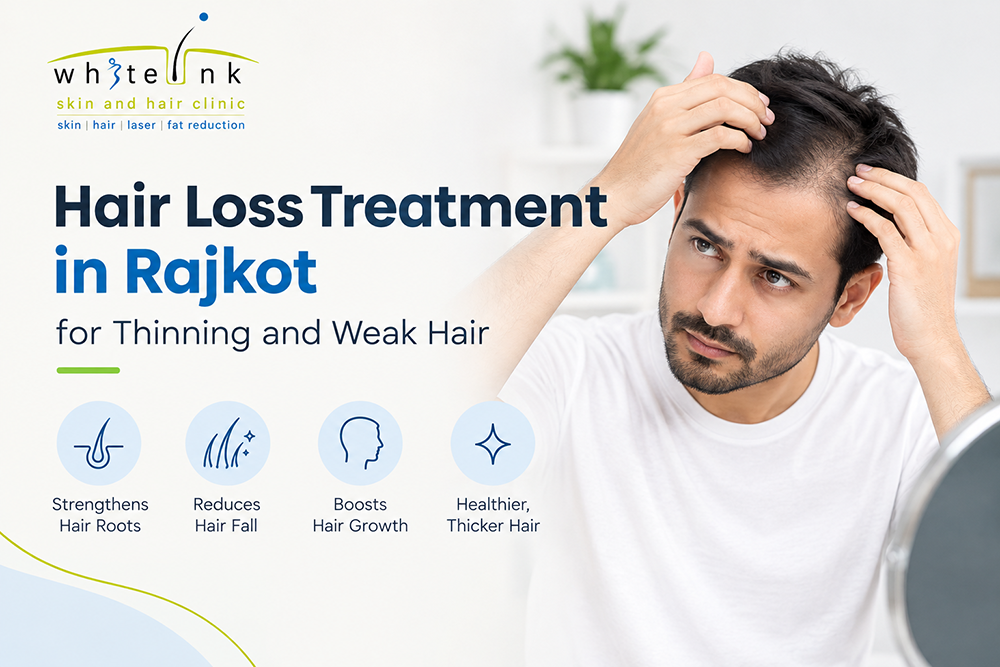
Hair Loss Treatment in Rajkot for Thinning and Weak Hair
Hair loss can be a frustrating experience, especially when you start noticing more hair on your pillow, comb, or shower floor. Thinning hair can also affect your overall appearance and confidence. While some daily hair shedding is normal, continuous hair fall, widening hair parting, receding hairline, or visible scalp may indicate an underlying hair or scalp concern.
The good news is that hair loss can have many different causes, and identifying the cause is an important first step toward choosing the right treatment. A dermatologist can evaluate your scalp, hair growth pattern, medical history, and other possible factors before recommending a suitable approach.
If you are looking for Hair Loss Treatment in Rajkot, understanding why your hair is becoming thin and what treatment options may be suitable can help you take the right next step.
What Causes Hair Loss and Hair Thinning?
Hair loss does not have one single cause. Different people can experience hair fall for different reasons. Some causes are temporary, while others may require long-term management.
Common reasons for hair loss include:
Hereditary Hair Loss
Genetic or hereditary hair loss is one of the most common causes of thinning hair in both men and women. In men, it may appear as a receding hairline or thinning around the crown. In women, it can often appear as overall thinning or a widening hair part.
Early diagnosis can be helpful because treatment may slow further hair loss and, in some cases, support hair regrowth.
Stress and Illness
Significant physical or emotional stress, high fever, major illness, surgery, or other changes in the body can sometimes lead to increased hair shedding. This type of shedding may become noticeable several weeks or months after the triggering event.
In some cases, hair growth can gradually improve once the underlying trigger is addressed.
Nutritional Deficiencies
Hair growth requires adequate nutrition. Low levels of certain nutrients, including iron, zinc, or other essential nutrients, may contribute to hair loss in some people.
However, taking supplements without knowing whether you have a deficiency is not always appropriate. A dermatologist may recommend tests when a nutritional deficiency is suspected.
Hormonal Changes
Hormonal changes can contribute to hair thinning. Conditions affecting hormone balance, including thyroid disorders and certain hormonal conditions, may be associated with hair loss.
Treating the underlying condition may help manage the associated hair loss.
Poor Hair Care Habits
Frequent chemical treatments, excessive heat, tight hairstyles, and rough handling can weaken hair and increase breakage. Repeated pulling from tight hairstyles can also contribute to a type of hair loss known as traction alopecia.
Signs That You May Need Hair Loss Treatment
Not every loose strand means that you have a hair loss condition. People normally shed some hair every day as part of the natural hair growth cycle.
However, you may want to consider a professional evaluation if you notice:
- Increased hair shedding for several weeks or months
- Visible thinning on the scalp
- A widening hair part
- Receding hairline
- Thinning around the crown
- Small or larger bald patches
- Hair becoming weaker or finer
- Reduced hair density
- Sudden or unexplained hair loss
- Itching, scaling, redness, or other scalp changes
The American Academy of Dermatology notes that early evaluation can be useful because the earlier the cause is identified, the sooner appropriate treatment or preventive measures can be considered.
How Is Hair Loss Diagnosed?
Before starting a hair fall treatment in Rajkot, it is important to understand what is causing the hair loss. Treating only the visible symptom may not address the actual reason behind the problem.
During a consultation, a dermatologist may ask about:
- When your hair loss started
- Whether the shedding is sudden or gradual
- Family history of hair loss
- Recent illness or stress
- Diet and lifestyle
- Medications or supplements
- Hair care and styling habits
- Hormonal or medical conditions
- Changes in your scalp
The scalp and hair may also be examined closely to understand the pattern of hair loss. Depending on the situation, additional tests may be recommended to check for possible nutritional deficiencies, hormonal problems, or other medical causes.
This evaluation helps create a more suitable treatment plan based on the individual's condition.
Hair Loss Treatment in Rajkot: What Are the Options?
There is no single treatment that works for every type of hair loss. The right option depends on the cause, severity, pattern of thinning, age, overall health, and individual response to treatment.
Some commonly considered approaches include the following.
Medical Hair Loss Treatment
Depending on the diagnosis, a dermatologist may recommend topical or oral medication to help manage certain types of hair loss.
For example, minoxidil is commonly used for some forms of hereditary hair loss. It may help reduce hair loss and support hair growth in suitable patients. Results generally take time, and continued use may be required to maintain its benefits.
Prescription medicines may also be considered for certain patients. These should only be used under appropriate medical guidance because the choice of medication depends on factors such as the cause of hair loss, age, health history, and other individual considerations.
PRP Hair Treatment
Platelet-rich plasma, commonly called PRP, is another treatment option used for certain types of hair loss.
During PRP treatment, a small amount of the patient's blood is collected and processed to separate the platelet-rich plasma. The prepared plasma is then injected into areas of the scalp where treatment is required.
PRP may be recommended as part of an individualised treatment plan for suitable patients. Research and dermatology guidance indicate that PRP can be a safe and useful option for some forms of hair loss, although results can vary from person to person.
Scalp and Hair Care
Hair loss treatment is not only about clinical procedures or medicines. Everyday hair care also matters.
If your hair is already weak or thinning, aggressive brushing, frequent heat styling, tight hairstyles, and harsh chemical treatments may increase damage and breakage.
Simple habits can help protect fragile hair:
- Use a gentle shampoo suitable for your scalp.
- Condition your hair after washing.
- Avoid unnecessarily tight hairstyles.
- Reduce excessive heat styling.
- Handle wet hair gently.
- Avoid frequent chemical treatments when your hair is weak.
- Follow the hair and scalp care routine recommended by your dermatologist.
Dermatologists also recommend avoiding treatments or supplements simply because they are marketed for hair growth. The underlying cause should be considered first.
Hair Thinning Treatment in Rajkot for Men and Women
Hair thinning can affect both men and women, but the pattern may look different.
Men may notice a receding hairline, thinning around the crown, or gradual reduction in hair density. Women may notice overall thinning or a wider parting.
Because the causes can differ, a hair thinning treatment in Rajkot should be selected after proper evaluation rather than following the same routine used by someone else.
For example, hereditary hair loss, nutritional deficiency, hormonal changes, scalp conditions, and temporary shedding may require different approaches.
Starting an appropriate treatment plan earlier may be helpful in managing progressive hair loss.
Why Early Hair Loss Evaluation Matters
Many people wait until hair loss becomes clearly visible before consulting a specialist. However, gradual thinning can continue for a long time before becoming obvious.
Early evaluation can help identify whether the hair loss is related to hereditary factors, temporary shedding, a medical condition, nutritional deficiency, scalp problem, or another cause.
A hair loss specialist in Rajkot can assess the pattern and determine whether treatment is required. In some cases, hair may naturally recover after the underlying trigger is resolved. In other cases, treatment may be recommended to reduce further loss or support regrowth.
It is also important to have realistic expectations. Hair growth takes time, and not every treatment produces immediate visible results. Some treatments may require several months before changes can be properly assessed.
How to Support Healthy Hair Growth at Home
Along with professional treatment, maintaining healthy daily habits can support your overall hair and scalp care.
Eat a Balanced Diet
Make sure your regular diet includes adequate protein and a variety of nutrients. If a deficiency is suspected, your doctor may recommend appropriate testing before suggesting supplementation.
Avoid Excessive Styling
Frequent straightening, curling, colouring, and other chemical processes may weaken the hair shaft. Give your hair time to recover between treatments when possible.
Protect Your Scalp
Keep your scalp clean and follow a suitable washing routine. If you experience persistent itching, scaling, redness, or other scalp symptoms, consult a dermatologist rather than relying only on home remedies.
Be Careful With Hair Accessories
Repeatedly pulling hair into very tight ponytails, buns, or other styles can put stress on the hair follicles. Changing hairstyles and avoiding constant tension can help reduce this type of damage.
When Should You Consult a Hair Specialist?
You should consider a professional consultation if your hair loss is persistent, increasing, sudden, or associated with other scalp symptoms.
A consultation is particularly useful if:
- Your hair is becoming visibly thinner.
- You notice bald patches.
- Your hairline is receding.
- You are losing significantly more hair than usual.
- Your scalp is itchy, painful, red, or scaly.
- Hair loss started after an illness or major physical change.
- You have a family history of hair loss.
- You have tried multiple products without improvement.
A proper diagnosis can help determine whether you need medical treatment, a procedure such as PRP, lifestyle changes, or simply monitoring over time.
Why Choose White Ink for Hair Treatment in Rajkot?
Choosing a hair treatment clinic should begin with understanding your individual hair and scalp concerns. At ‘White Ink’, hair and scalp concerns can be evaluated to understand the pattern and possible causes of hair loss before planning suitable treatment.
The focus should be on choosing an approach based on your condition rather than using the same treatment for everyone. Whether you are experiencing gradual thinning, increased hair fall, or weak hair, a professional consultation can help you understand your available options.
If you are considering hair treatment in Rajkot, discussing your concerns with a qualified dermatologist can be a useful first step toward a personalized treatment plan.
Frequently Asked Questions
- What is the best Hair Loss Treatment in Rajkot?
There is no single best treatment for every person because hair loss can have different causes. A dermatologist first evaluates the pattern and possible cause of hair loss and then recommends an appropriate treatment plan. Options may include medication, PRP, scalp care, or other treatments depending on the diagnosis.
- Can hair thinning be treated permanently?
The outcome depends on the cause of hair thinning. Some temporary types of hair loss may improve once the underlying cause is addressed, while hereditary hair loss may require ongoing management. Early diagnosis and appropriate treatment can help manage some forms of progressive hair loss.
- Is PRP useful for hair loss?
PRP may be considered for certain types of hair loss. It involves preparing platelet-rich plasma from the patient's own blood and injecting it into selected areas of the scalp. Results vary, and a dermatologist can determine whether PRP is suitable for an individual patient.
- How long does it take to see results from hair loss treatment?
Hair growth is a gradual process, so results usually cannot be judged immediately. Depending on the treatment and cause of hair loss, visible improvement may take several months. Your dermatologist can explain the expected timeline based on your individual treatment plan.
- Should I take hair growth supplements for hair fall?
Hair supplements should not be taken automatically. Hair loss can have many causes, and supplements are most appropriate when a deficiency or specific nutritional need has been identified. Excessive intake of certain nutrients can also cause health problems or worsen hair loss.
Take the Next Step for Healthier-Looking Hair
Persistent hair fall and thinning hair should not be ignored, especially when the problem continues or becomes more noticeable. Finding the underlying cause is an important part of choosing an appropriate treatment.
If you are looking for Hair Loss Treatment in Rajkot, consult the team at White Ink to discuss your hair and scalp concerns and understand which treatment options may be suitable for you.
Book your consultation today and take the first step toward understanding your hair loss.