
Blog / News Details
22 October
2026
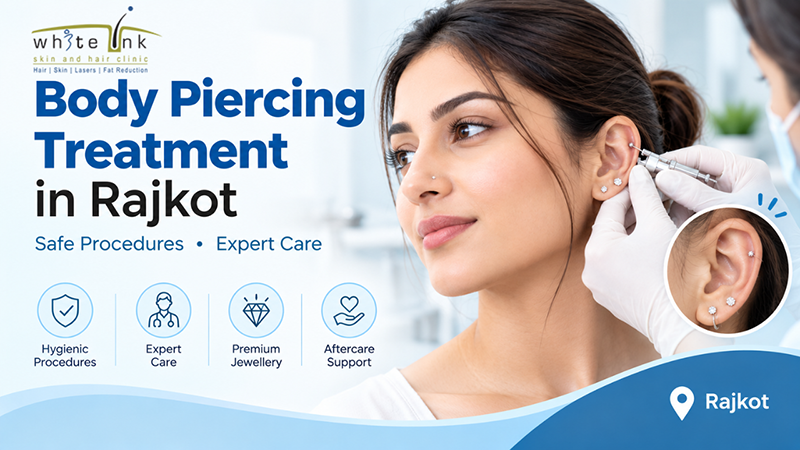
Body Piercing Treatment in Rajkot: Safe Procedures and Expert Care
Body Piercing Treatment in Rajkot involves creating a small opening in the skin to place decorative jewellery while taking appropriate steps to reduce the risk of infection, irritation, and scarring. Whether you are considering an ear, nose, or another type of body piercing, understanding the procedure, hygiene practices, and aftercare is essential for protecting your skin. Choosing an experienced professional and following proper aftercare instructions can help support the healing process.
Body piercing is a popular way to express personal style, but it should never be treated as a procedure that requires attention only on the day of piercing. The condition of your skin, the location of the piercing, the jewellery material, and your daily care routine all influence how the area heals. At White Ink, a skin and hair clinic in Rajkot led by Dr. Tejas Ramani, patients can explore available aesthetic services and seek guidance relevant to their skin concerns.
This guide explains what to consider before getting a piercing, how a safe body piercing procedure should be approached, how to care for newly pierced skin, and when to seek professional medical advice.
What Is Body Piercing?
Body piercing is a procedure in which a small opening is created through the skin or another suitable tissue to accommodate jewellery. Common piercing locations include the earlobes, ears, nose, and other areas of the body, depending on personal preferences and individual suitability.
Although piercing may appear simple, it creates a wound that needs time to heal. The procedure can cause temporary tenderness, mild swelling, or redness. Problems may develop if the equipment is contaminated, the jewellery is unsuitable, or the piercing is exposed to unnecessary friction and bacteria.
Before choosing a piercing, it is important to understand the potential risks and the care required afterward. A suitable location and appropriate hygiene measures can help reduce avoidable complications.
Common Types of Body Piercing
Some common piercing options include:
- Ear piercing: Includes the earlobe and cartilage. Cartilage piercings may carry a greater risk of serious infection than earlobe piercings.
- Nose piercing: Usually involves the nostril and requires careful cleaning because of the surrounding skin and nasal environment.
- Navel piercing: Located around the belly button and may take longer to heal because clothing can rub against the area.
- Other body piercings: Certain locations require additional assessment because of their anatomy, movement, and potential complications.
Not every piercing is suitable for every person. The location, skin condition, jewellery choice, and healing requirements should be considered before proceeding.
Why Is a Safe Body Piercing Procedure Important?
A safe body piercing procedure begins with appropriate preparation, hygienic equipment, suitable jewellery, and clear aftercare instructions. Since piercing breaks the skin barrier, poor technique or contaminated instruments can introduce bacteria and increase the risk of infection.
Choosing a professional who follows established hygiene practices is an important first step. A clean environment alone is not enough; proper instrument handling, hand hygiene, and appropriate disposal of single-use equipment also matter.
1. Reduces the Risk of Infection
Bacteria can enter the piercing site through contaminated equipment, unwashed hands, or contact with dirty surfaces. Infection may lead to increasing redness, warmth, pain, swelling, or discharge.
Using properly sterilised equipment and maintaining good hygiene can reduce the risk, although no procedure can guarantee that infection will never occur.
2. Helps Minimise Skin Trauma
Correct placement and suitable technique can help avoid unnecessary tissue damage. Piercing through inappropriate areas or using excessive force may increase discomfort, bleeding, or healing problems.
The location should be selected carefully, particularly when considering cartilage or areas exposed to frequent pressure and movement.
3. Supports Better Healing
Healing depends on more than the initial procedure. Appropriate jewellery, gentle cleaning, and avoiding repeated handling help protect the healing tissue.
Following instructions from a qualified professional can also help you identify changes that require medical attention.
What to Check Before Getting Body Piercing in Rajkot
If you are considering Body piercing in Rajkot, take time to assess the professional, the environment, and your own skin condition before making a decision.
Choose an Experienced Professional
Ask about the professional's training, experience, hygiene procedures, and approach to complications. You should receive clear answers about the process, possible risks, jewellery options, and expected healing period.
Avoid attempting to pierce your own skin or allowing an untrained person to perform the procedure.
Check Sterilisation and Equipment
Reusable instruments that penetrate the skin must be appropriately sterilised. Single-use needles and other disposable items should be opened from sterile packaging for the procedure and discarded safely afterward.
Equipment should never be reused between clients without appropriate sterilisation. The work area should also be clean, and the professional should follow hand-hygiene and protective-glove practices.
Discuss Jewellery Material
Jewellery material can affect the likelihood of irritation or an allergic reaction. Implant-grade titanium is often considered a suitable option for initial piercings when appropriately specified. Other materials may be appropriate depending on their composition, quality, and the individual's sensitivity.
If you have a known metal allergy, particularly to nickel, inform the professional beforehand. Jewellery should also have an appropriate size and shape to accommodate initial swelling without creating excessive pressure.
Consider Your Skin and Medical History
Existing skin irritation, an active infection, or a history of raised scars may influence whether piercing is appropriate. Certain medical conditions and medications can also affect healing.
If you have concerns about allergies, unusual scarring, or a skin condition near the intended site, consult a healthcare professional before proceeding.
Understanding the Body Piercing Procedure
Knowing what to expect can make the experience more comfortable and help you prepare for proper aftercare.
Step 1: Initial Assessment and Placement
The professional should discuss your preferred piercing location, assess its suitability, and explain the risks. Placement should take account of the area's anatomy, the jewellery selected, and possible friction from clothing or everyday activities.
You should have an opportunity to ask questions and understand the procedure before giving consent.
Step 2: Cleaning and Preparation
The skin should be prepared using an appropriate method, and the professional should follow established infection-control practices. Sterile, single-use piercing needles are generally preferred for piercings that require skin penetration.
Step 3: Piercing and Jewellery Placement
The piercing is created at the selected location, and suitable jewellery is placed according to the procedure. Brief discomfort, minor bleeding, or temporary tenderness may occur.
Severe or unexpected pain should not be ignored. The professional should explain the immediate aftercare requirements before you leave.
Step 4: Aftercare Instructions
You should receive clear guidance about cleaning, handling, jewellery changes, activities to avoid, and signs of infection. Healing times vary considerably according to the piercing location and individual factors.
Do not assume that the skin has fully healed just because the initial tenderness or redness has disappeared.
Skin Care After Body Piercing
Skin care after body piercing is essential because the opening needs time to heal. A consistent, gentle routine helps protect the area from irritation and reduces opportunities for bacteria to enter the wound.
1. Clean Your Hands Before Touching the Piercing
Always wash your hands thoroughly with soap and water before cleaning or handling the piercing. Touching the area with unwashed hands can transfer bacteria to healing tissue.
Avoid touching the jewellery unnecessarily throughout the day.
2. Clean the Area Gently
Follow the aftercare instructions provided by your qualified professional. Sterile saline wound wash containing 0.9% sodium chloride is commonly recommended for cleaning healing piercings. A gentle, fragrance-free cleanser may also be appropriate for some locations.
Rinse away any cleanser residue when required and dry the area carefully with clean disposable gauze or another suitable clean material.
Avoid excessive cleaning, as repeated washing can irritate the skin and interfere with healing.
3. Avoid Twisting or Moving the Jewellery
Do not twist, rotate, or repeatedly move the jewellery while the piercing is healing. Unnecessary movement can irritate the tissue and delay recovery.
Avoid pulling the jewellery when changing clothes, brushing your hair, or using towels. If the jewellery feels too tight, becomes embedded, or causes persistent pressure, seek professional advice.
4. Keep Cosmetics and Harsh Products Away
Perfumes, makeup, lotions, alcohol, hydrogen peroxide, and harsh antiseptic products may irritate a healing piercing. Avoid applying these products directly to the area unless specifically advised by a healthcare professional.
Do not use home remedies or concentrated salt mixtures without appropriate guidance.
5. Protect the Area During Daily Activities
Clothing, headphones, helmets, hair accessories, and sleeping positions can place pressure on certain piercings. Choose clothing and daily routines that minimise friction.
Avoid swimming in pools, lakes, or hot tubs during the initial healing period, following the advice of your professional. Shared or untreated water can expose healing tissue to microorganisms.
6. Keep the Initial Jewellery in Place
Do not remove or replace the jewellery too early. Even if the outside appears healed, the inner tissue may still be recovering.
If you suspect an infection, do not independently remove the jewellery without medical advice. A healthcare professional can determine the safest course of action based on the location and severity of the problem.
Body Piercing Infection Prevention: Warning Signs to Recognise
Body piercing infection prevention depends on good hygiene, appropriate jewellery, careful aftercare, and early attention to concerning symptoms.
Some mild tenderness, localised redness, and swelling can occur soon after piercing. However, symptoms that worsen instead of gradually improving require attention.
Signs That May Indicate an Infection
Watch for the following changes:
- Increasing pain, warmth, or swelling around the piercing.
- Redness or darkened skin that spreads beyond the immediate area.
- Thick yellow or green discharge, especially if accompanied by an unpleasant smell.
- Persistent bleeding or a wound that does not appear to be healing.
- Fever, chills, or feeling generally unwell.
Seek prompt medical advice if these symptoms occur. Cartilage piercings deserve particular attention because infections in this area can become serious. Severe pain, rapidly spreading redness, fever, or significant swelling warrants urgent assessment.
Do not try to treat a suspected infection using leftover antibiotics or unprescribed creams. A clinician can determine whether treatment is necessary.
How to Reduce the Risk of Complications
You can support safer healing by maintaining clean hands, following the recommended cleaning routine, avoiding unnecessary jewellery movement, and protecting the area from friction.
Do not share jewellery or cleaning products that may become contaminated. Avoid changing jewellery before the piercing has healed sufficiently, and seek advice if the jewellery causes persistent irritation.
How Long Does a Body Piercing Take to Heal?
Healing time depends on the piercing location, individual health, jewellery, and aftercare. Earlobe piercings often heal faster than cartilage or navel piercings, which may require several months or longer.
A piercing can look normal on the outside while the deeper tissue is still healing. Therefore, appearance alone is not a reliable way to decide whether it is safe to change the jewellery.
Avoid rushing the healing process. If discomfort persists, the opening repeatedly bleeds, or the skin remains irritated, seek an assessment rather than continuing to manage the problem yourself.
When Should You Consult a Dermatologist in Rajkot?
Consulting a Dermatologist in Rajkot may be helpful if you have concerns about your skin before piercing or develop complications afterward.
A dermatologist or other qualified healthcare professional can assess symptoms, identify possible infection or allergic reactions, and recommend appropriate treatment.
Persistent Redness, Itching, or Irritation
Ongoing itching or redness may result from irritation, sensitivity to jewellery, or an infection. The causes can appear similar, so an assessment may be necessary before choosing treatment.
Raised Scars or Keloids
Some people develop raised scars after skin injuries, including piercings. A keloid can extend beyond the original wound and may continue to grow.
If you have previously developed keloids or notice a raised area forming around a piercing, seek professional advice early. Do not attempt to cut, squeeze, or treat the growth with unverified remedies.
Embedded Jewellery or Delayed Healing
Jewellery that becomes buried in swollen tissue, persistent pain, or a piercing that fails to heal normally should not be ignored. Avoid forcing the jewellery out or attempting to reopen the piercing yourself.
A healthcare professional can assess whether treatment or jewellery removal is required.
Why Consider White Ink for Skin-Related Guidance in Rajkot?
White Ink Skin and Hair Clinic is located at 3/13, Jagnath Plot, Rajkot, Gujarat. The clinic is led by Dr. Tejas Ramani, who has practised in Rajkot since 1992 and has focused on cosmetic and laser dermatology since 2009.
White Ink offers a range of skin, hair, and aesthetic services, including body piercing, as listed on its official website. Individuals considering a piercing can contact the clinic to understand the available service, applicable hygiene measures, and whether a consultation is appropriate for their concerns.
When evaluating any piercing service, prioritise clear explanations, appropriate infection-control practices, suitable jewellery, and accessible guidance if a complication develops. Your individual skin condition and medical history should always be considered before proceeding.
Frequently Asked Questions
- Is body piercing safe?
Body piercing can be performed with reduced risk when appropriate equipment, hygiene practices, and aftercare are followed. However, infection, allergic reactions, tissue injury, and scarring remain possible. Choosing a qualified professional is an important precaution.
- How should I clean a new body piercing?
Wash your hands before touching the area and follow the aftercare instructions provided by your professional. Sterile saline wound wash is commonly used for healing piercings. Avoid harsh chemicals, excessive cleaning, and unnecessary jewellery movement.
- Can I change my jewellery after a few days?
Usually, changing jewellery after only a few days is too early. Healing depends on the location and individual circumstances. Keep the initial jewellery in place unless a qualified professional or healthcare provider advises otherwise.
- What should I do if my piercing becomes swollen?
Mild initial swelling can occur, but worsening swelling, increasing pain, warmth, spreading redness, or unusual discharge may indicate a complication. Seek medical advice promptly, particularly for cartilage piercings. Do not remove jewellery yourself if an infection is suspected unless a healthcare professional advises you to do so.
- Can a body piercing leave a scar?
Yes. Piercing can leave a small scar, and some individuals develop raised scars or keloids. Your personal scarring history may help determine whether a particular piercing is advisable.
- Where can I enquire about Body Piercing Treatment in Rajkot?
You can contact White Ink Skin and Hair Clinic in Jagnath Plot, Rajkot, to enquire about its body piercing service and the precautions followed during the procedure. Discuss any skin concerns, metal allergies, or history of unusual scarring before proceeding.
Book Your Body Piercing Consultation at White Ink, Rajkot
A body piercing should be approached with careful planning, appropriate hygiene, and a commitment to aftercare. Choosing a suitable piercing location, using appropriate jewellery, and recognising early warning signs can help reduce avoidable complications and support healthier healing.
If you are considering Body Piercing Treatment in Rajkot, contact White Ink to enquire about the available service, discuss your requirements, and understand the precautions you should take before and after the procedure.
Call White Ink at +91 96388 02020 to enquire about body piercing and arrange a consultation in Rajkot.