
Blog / News Details
22 October
2026
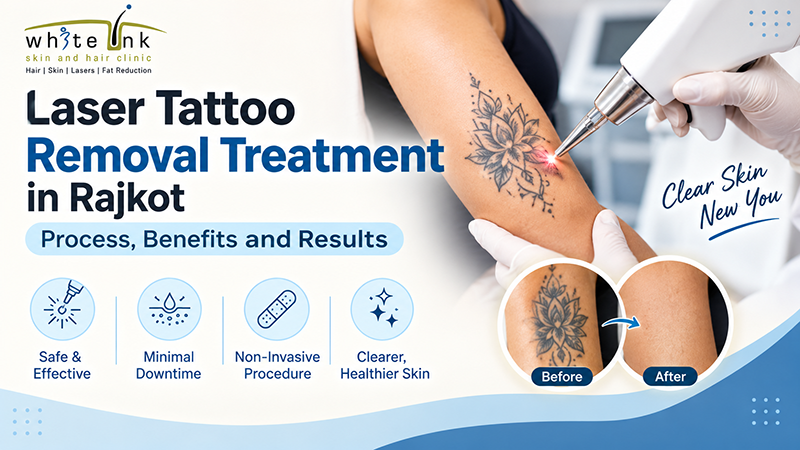
Laser Tattoo Removal Treatment in Rajkot: Process, Benefits and Results
A tattoo may hold personal meaning when you first get it, but your preferences, lifestyle, or professional requirements can change over time. If you have an unwanted tattoo, modern laser technology offers a way to gradually fade or remove the ink without surgically cutting away the tattooed skin. Laser Tattoo Removal Treatment in Rajkot is an option for people who want to reduce the appearance of an old tattoo, remove a name or symbol, or prepare the area for a possible cover-up tattoo.
Laser tattoo removal works by directing controlled pulses of laser towards the tattoo pigment beneath the skin. The laser breaks the pigment into smaller particles, which the body's natural processes gradually clear. The number of sessions and the final results depend on several factors, including the tattoo's size, colour, depth, age, and your skin type.
At White Ink Skin and Hair Clinic in Rajkot, laser tattoo removal is among the cosmetic treatments offered under the care of Dr. Tejas Ramani. Understanding the procedure, expected results, aftercare, and possible risks can help you make an informed decision before beginning treatment.
What Is Laser Tattoo Removal Treatment?
Laser tattoo removal is a non-surgical cosmetic procedure designed to reduce or remove unwanted tattoo ink from the skin. During the procedure, a suitable laser delivers short pulses of light that target pigment particles within the tattoo.
Tattoo ink sits beneath the skin's surface, which is why ordinary washing, scrubbing, or exfoliation cannot remove a permanent tattoo. Laser treatment targets the ink while aiming to minimise damage to the surrounding skin.
After the laser breaks the pigment into smaller fragments, the body's immune system gradually processes and clears some of these particles. This process takes time, so tattoo removal generally requires multiple treatment sessions rather than a single visit.
The goal may be complete removal, substantial fading, or lightening the existing design before getting a cover-up tattoo. Rarely, complete removal is not always possible, and some tattoos may leave faint traces or changes in skin colour.
Why Do People Consider Tattoo Removal?
People choose tattoo removal for different personal, social, and professional reasons. A tattoo that once felt meaningful may no longer reflect their current preferences.
Common reasons include:
- Changed personal preferences: You may no longer connect with a design, symbol, or quotation you selected years ago.
- Names or relationship tattoos: Some people decide to remove a former partner's name or a design associated with an earlier relationship.
- Faded or blurred designs: Older tattoos may lose their original definition and become less appealing.
- Professional considerations: Certain workplaces or professional environments may have expectations regarding visible tattoos.
- Preparing for a cover-up: Fading an existing tattoo can help a tattoo artist work with a new design.
- Unwanted cosmetic tattoos: Some people seek professional assessment for unwanted permanent makeup or other tattooed pigment.
Whatever your reason, the right approach begins with a consultation. A qualified medical professional can assess your tattoo, discuss realistic outcomes, and explain whether laser treatment is appropriate for your skin.
How Does the Laser Tattoo Removal Process Work?
Understanding the laser tattoo removal process can help you know what to expect before, during, and after your appointment.
1. Initial Consultation and Skin Assessment
The first step is an assessment of your tattoo and skin. The doctor reviews the tattoo's size, location, colours, depth, and approximate age. Your medical history, previous tattoo removal treatments, skin sensitivity, and tendency to develop scars may also be relevant.
Certain ink colours respond differently to laser wavelengths, while some tattoos are more difficult to treat because their pigment is deeply embedded or densely packed.
The consultation is also an opportunity to discuss your goal. Removing a small black symbol may require a different approach from fading a large, multicoloured tattoo.
2. Preparing the Treatment Area
Before treatment, the skin is examined and prepared according to the clinician's instructions. The treatment area may be cleaned, and protective eyewear is provided to protect the eyes from laser exposure.
Depending on the tattoo and the treatment plan, the clinician may recommend a test spot or a suitable method of reducing discomfort.
Inform the doctor about any medicines, skin conditions, recent tanning, previous reactions, or other factors that could affect treatment. Do not stop prescribed medication without medical advice.
3. Applying the Laser
During the procedure, the laser device delivers controlled pulses of light to the tattooed area. The energy is absorbed by suitable tattoo pigments, breaking them into smaller particles.
You may experience a snapping, stinging, or warm sensation during treatment. The level of discomfort varies with the tattoo's location, size, and individual pain tolerance.
The duration depends on the area being treated. A small tattoo may take only a short time, while larger or more complex designs may require longer sessions.
4. The Body Gradually Clears the Pigment
After the laser session, the body's natural processes gradually remove some of the fragmented pigment. This is not an immediate change. The tattoo usually fades progressively over several weeks and across repeated sessions.
Your skin needs time to recover between appointments. Treating the same area too frequently can increase the risk of complications, so follow the interval recommended by your treating professional.
5. Follow-Up Sessions
At follow-up appointments, the clinician assesses how your tattoo and skin have responded. Treatment settings or the plan may be adjusted when appropriate.
Some tattoos fade relatively well, while others are more resistant. The number of sessions should be based on your individual assessment rather than a guaranteed figure.
What Are the Benefits of Laser Tattoo Removal?
Laser treatment can be useful for people who want to reduce unwanted tattoo pigment without undergoing a procedure that surgically removes the skin.
Non-Surgical Approach
Laser tattoo removal targets the pigment without cutting out the tattooed skin. It is therefore a non-surgical option for many unwanted tattoos, although it still requires proper medical assessment and aftercare.
Gradual Reduction of Unwanted Ink
Repeated treatments can progressively lighten tattoo pigment. This gradual process allows the clinician to monitor your response and plan subsequent sessions according to your skin's recovery.
Treatment for Different Tattoo Designs
Depending on the laser technology, ink colours, and tattoo characteristics, treatment may be possible for small symbols, lettering, names, and larger designs. Not every colour responds equally well, so an assessment is important.
Can Help Prepare for a Cover-Up Tattoo
If you do not want complete removal, laser treatment may help fade the original design before a tattoo artist creates a new one. The amount of fading required depends on the existing ink and the proposed cover-up.
Limited Downtime for Many Patients
Many people can return to their usual activities relatively soon after a session. However, redness, swelling, tenderness, blistering, or temporary skin changes can occur. Recovery depends on the treatment area and individual skin response.
What Factors Affect Tattoo Removal Results?
No two tattoos respond exactly the same way. Several factors influence how quickly the ink fades and how much removal is achievable.
Tattoo Colour
Black and some dark-coloured inks often respond better to commonly used tattoo-removal lasers. Green, yellow, light blue, and certain other pigments can be more challenging, depending on the laser wavelength and ink formulation.
Multicoloured tattoos may need different treatment approaches for different pigments.
Tattoo Size and Location
Smaller tattoos generally require less treatment time per session, but size alone does not determine the number of sessions. Tattoos on different body areas may clear at different rates because circulation and other biological factors vary.
Ink Depth and Density
Professional tattoos may contain dense pigment distributed at different depths. Heavily inked designs, layered tattoos, and cover-ups can be more difficult to remove than lighter or less densely pigmented tattoos.
Age of the Tattoo
Older tattoos may already have faded naturally, which can sometimes make them easier to treat. However, age does not guarantee a particular result.
Skin Type and Healing Response
Your natural skin tone, tanning, medical history, and tendency to develop pigmentation changes or raised scars can influence treatment decisions. Proper assessment is particularly important for reducing the risk of unwanted skin changes.
How Many Sessions Are Needed for Tattoo Removal?
The number of sessions required varies from person to person. Some tattoos show noticeable fading after a few treatments, while others require many sessions over several months or longer.
A clinician considers the tattoo's size, colour, depth, location, and response to previous treatments when estimating the likely treatment course.
Sessions are usually spaced several weeks apart to allow the skin to recover and the body to clear fragmented pigment. Rushing the process does not necessarily produce better results and may increase the risk of complications.
It is also important to understand the difference between fading and complete removal. A tattoo can become significantly lighter without disappearing entirely. Your clinician should explain the likely outcome for your specific tattoo before treatment begins.
What Results Can You Expect After Laser Tattoo Removal?
Results develop gradually rather than immediately after a session. The tattoo may appear temporarily different during the healing period, and the amount of fading becomes easier to assess as the skin recovers.
After the First Session
Some tattoos begin to show fading after the first treatment, while others need several sessions before the change becomes obvious. Redness, mild swelling, or tenderness may occur shortly after treatment.
After Multiple Sessions
With repeated treatments, the tattoo may become progressively lighter. Dark pigments may respond differently from coloured pigments, and some areas of the same tattoo may fade faster than others.
Your clinician can assess progress and adjust the plan when necessary.
Is Complete Tattoo Removal Possible?
Complete removal is possible in some cases, but it cannot be guaranteed. Some pigments are resistant to available laser wavelengths, and faint outlines, residual colour, or changes in skin pigmentation may remain.
An honest discussion about realistic expectations is essential before beginning treatment.
What Are the Possible Side Effects and Risks?
Laser tattoo removal is a medical procedure and can cause side effects, even when performed appropriately. Understanding these risks helps you make a better-informed decision.
Possible effects include:
- Temporary redness, swelling, tenderness, or itching.
- Blistering, crusting, or minor skin irritation.
- Temporary lightening or darkening of the treated skin.
- Incomplete pigment removal or a faint tattoo shadow.
- Infection if the treated area is not cared for properly.
- Scarring, although the risk depends on several factors.
The risk of complications can vary with the laser settings, tattoo characteristics, skin type, and aftercare. Choosing a qualified medical professional and following the recommended treatment plan can help manage these risks.
Contact your treating clinician if you develop worsening pain, spreading redness, pus, fever, or other signs of infection after treatment.
How Should You Care for Your Skin After Treatment?
Aftercare is an important part of the tattoo removal process. The treated skin needs time to recover between sessions.
Keep the Area Clean
Follow the clinic's instructions for gently cleaning and protecting the treated skin. Avoid unnecessary friction, picking at scabs, or scratching the area.
Protect Your Skin From Sun Exposure
Protect the treated area from direct sunlight and use sun protection as advised by your clinician. Sun exposure can increase the risk of pigmentation changes, particularly while the skin is healing.
Avoid Irritating Products
Do not apply harsh exfoliants, acids, or unapproved creams to the treated area. Use only the products recommended by your healthcare professional.
Allow the Skin to Heal
Avoid picking blisters or crusts, as this can increase the risk of infection and scarring. Follow guidance about exercise, swimming, and other activities that may affect the treated area.
Attend Follow-Up Appointments
Follow-up visits help the clinician assess healing, review fading, and determine when another session may be appropriate. Do not schedule additional treatments sooner than advised.
How to Choose a Laser Tattoo Removal Clinic in Rajkot
Selecting the right clinic is an important part of your treatment journey. Price and convenience matter, but they should not be the only factors in your decision.
When comparing options for a laser tattoo removal clinic in Rajkot, consider the following:
- Qualified medical supervision: Confirm who will assess your skin and oversee the treatment.
- Individual assessment: The clinic should consider your tattoo's colour, size, depth, and location before recommending a plan.
- Clear expectations: Ask about the likely number of sessions, possible side effects, and the possibility of incomplete removal.
- Hygiene and safety: The clinic should follow appropriate infection-control procedures and provide suitable eye protection.
- Aftercare guidance: You should receive clear instructions on skin care and when to seek medical advice.
- Transparent pricing: Understand whether charges apply per session and what is included in the quoted cost.
A responsible clinic will explain both the potential benefits and the limitations of treatment rather than promising guaranteed results.
Why Consider White Ink for Laser Tattoo Removal in Rajkot?
White Ink is a cosmetic laser and skin care clinic in Rajkot led by Dr. Tejas Ramani. According to the clinic's official website, Dr. Ramani has practised in Rajkot since 1992 and has focused on cosmetic and laser dermatology since 2009.
White Ink offers laser tattoo removal alongside other skin and hair treatments. If you are considering treatment, a consultation can help you understand whether your tattoo is suitable for laser removal and what results may be realistic for your skin.
The right treatment plan should account for your individual needs, tattoo characteristics, and medical suitability. Before proceeding, discuss the expected treatment schedule, possible side effects, aftercare requirements, and total estimated cost with the clinic.
Take the Next Step Towards Removing an Unwanted Tattoo
If an old tattoo no longer reflects your preferences, professional assessment can help you understand your options. Laser treatment may gradually reduce unwanted pigment, but the number of sessions and final outcome depend on your individual circumstances.
Book your consultation with White Ink in Rajkot to discuss Laser Tattoo Removal Treatment in Rajkot. Speak with the clinic about your tattoo, expected results, treatment schedule, and suitable aftercare before deciding to proceed.
Frequently Asked Questions
1. Is laser tattoo removal painful?
You may feel a snapping, stinging, or warm sensation during treatment. The level of discomfort depends on the tattoo's location, size, and your pain tolerance. Your clinician can discuss suitable ways to manage discomfort.
2. How long does laser tattoo removal take?
An individual session may take only a few minutes for a small tattoo, while larger designs require more time. The complete treatment course usually extends over several months because sessions need to be spaced apart.
3. Can all tattoo colours be removed?
Not all colours respond equally well to laser treatment. Black and some dark pigments often respond better, while certain lighter or brightly coloured inks can be more challenging. Results depend on the pigment and the available laser technology.
4. Can laser tattoo removal leave scars?
Scarring is possible, although the risk varies with the treatment method, skin response, and aftercare. Following professional instructions and avoiding picking or scratching the treated area can help reduce avoidable complications.
5. Is laser tattoo removal suitable for every skin type?
Laser treatment may be possible for different skin types, but the choice of laser settings and treatment plan matters. A medical professional should assess your skin tone, medical history, and risk of pigmentation changes before treatment.
6. How much does tattoo removal treatment in Rajkot cost?
The cost depends on the tattoo's size, colours, location, complexity, and the number of sessions required. Contact the clinic for an individual assessment and an estimate based on your treatment needs.